STEM Courses for Teachers: What they Need to Learn to Teach STEM
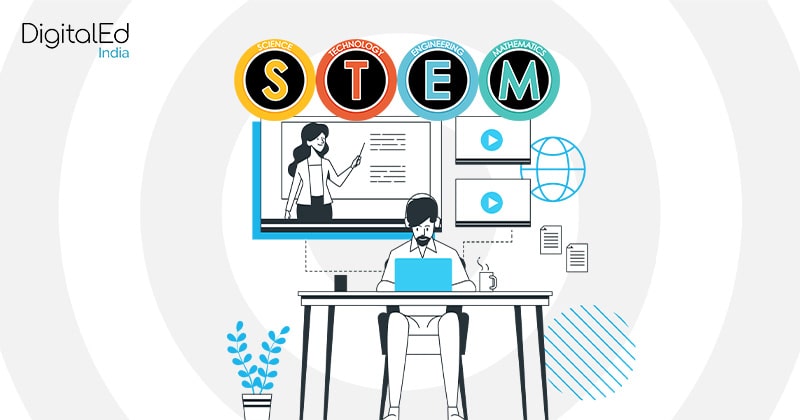
STEM Courses for Teachers: What They Need to Learn to Teach STEM
Digital learning has transformed the traditional education model, and STEM education for teachers is a direct outcome of this shift. STEM—Science, Technology, Engineering, and Mathematics—focuses on experiential and application-based learning rather than rote memorization.
STEM courses for teachers are designed to help educators move beyond textbooks and classroom theory, enabling students to apply concepts to real-world problems through practical exposure. This hands-on approach is what makes STEM education increasingly essential in today’s learning ecosystem.
STEM Courses for Teachers: Why Training Matters
A teacher plays a vital role in shaping student outcomes. To deliver effective STEM education, educators themselves must be equipped with the right skills, tools, and methodologies. This is where STEM training for teachers becomes critical.
Today, several online STEM courses for teachers and professional development programs are available that help educators understand how to become confident, skilled, and certified STEM educators. These programs focus on pedagogy, curriculum design, assessment strategies, and technology-enabled instruction.
STEM Teacher Training: Building Skills for the Classroom
STEM teacher training helps educators develop subject-specific and instructional skills through structured guidance and practice-based exercises. The goal of STEM training is to ensure teachers can teach STEM concepts accurately, effectively, and confidently.
Typically, STEM teacher training programs are led by subject matter experts in science, mathematics, engineering, or technology. While teachers already have foundational knowledge, professional STEM training refines their ability to teach interdisciplinary concepts, encourage problem-solving, and foster innovation in the classroom.
How to Become a STEM Teacher
Many educators ask, “How to become a STEM teacher?” The pathway varies depending on background, but the traditional route to becoming a certified STEM educator includes:
- A Bachelor’s degree program
- STEM-specific courses in the curriculum
- Student teaching experience
- Passing a national teacher certification exam
- Specialized STEM teacher certification in India or abroad
These steps ensure educators are well-prepared to meet classroom demands and industry-aligned learning outcomes.
Master of Arts in Teaching for STEM Educators
If you already hold a bachelor’s degree and want to advance your career as a STEM teacher, pursuing a Master of Arts in Teaching can be a valuable option. This degree provides classroom training, prepares you for certification exams, and strengthens your instructional approach.
A master’s degree enhances employability, earning potential, and opens doors to leadership roles such as STEM coordinator, academic designer, or STEM trainer in schools, colleges, and learning organizations.
Career Growth and Scope for STEM Educators
The rise of online STEM courses for teachers has reshaped education delivery worldwide. STEM education prepares students not just for exams, but for real-world challenges, making them future-ready.
Research consistently shows that future job markets demand strong STEM skills. As a result, the demand for STEM teachers and certified STEM educators is growing rapidly in both India and globally. Beyond schools and universities, STEM educators can also collaborate with businesses, non-profits, and government organizations on skill development and innovation initiatives.
Resources for Current and Aspiring STEM Teachers
Today’s educators have access to a wide range of professional development resources, including STEM teacher certification programs, curriculum design tools, and teaching platforms.
Several public and private organizations offer STEM courses for teachers—from full certification programs to short upskilling modules. Platforms like Möbius support both teachers and students by enabling interactive learning, assessments, and skill advancement.
MOOCs (Massive Open Online Courses) offered by universities are another option. However, educators should carefully evaluate whether a MOOC aligns with their certification, classroom, or institutional requirements.
Conclusion
STEM education is shaping the future of learning, and well-trained teachers are central to its success. By enrolling in structured STEM training, pursuing STEM teacher certification in India, and leveraging digital learning platforms, educators can deliver impactful, future-ready education.
If you’re looking to enhance your skills as a STEM teacher or STEM trainer using advanced digital tools and interactive assessment frameworks, now is the time to act. Explore how DigitalEd supports STEM education for teachers—schedule a personalized demo today and see how technology can transform your teaching experience.
4 Replies to “STEM Courses for Teachers: What they Need to Learn to Teach STEM”
I want to know more about STEM education.
Hi, pls provide me the details how to become a Stem Educator.
Hi, please provide me the details how to become a stem educator.
is there any certification needed, any exam have to be given??
Does a person having law background become a stem teacher?