Remote Proctoring Solutions for Higher Education: Safeguarding Integrity in STEM Assessments
Introduction
Examinations have always carried a sense of gravity. For decades, students prepared to sit in classrooms, auditoriums, or even gymnasiums—scribbling answers under the watchful eyes of proctors. Their role was simple yet crucial: verify identities, prevent misconduct, and ensure fairness. But as education increasingly shifts online, especially in STEM disciplines, institutions face a pressing challenge—how to preserve these safeguards outside traditional classrooms. This is where remote proctoring solutions step in, offering higher education a reliable way to conduct secure, credible, and scalable assessments in the digital era.
But the shift to digital education, accelerated by the rise of STEM-focused online learning, has redefined how we assess students. Today, higher ed remote assessments are no longer a temporary solution but a long-term strategy for accessible, scalable, and inclusive learning. With this transformation, the need for remote proctoring solutions has become more pressing than ever.
Why Proctoring Still Matters in the Digital Era
Not every assessment requires supervision. Collaborative projects, research assignments, or low-stakes quizzes may thrive without a proctor. But when it comes to high-stakes evaluations—final exams, placement tests, or standardized assessments—academic credibility is non-negotiable.
In these contexts, the responsibilities of a proctor can be divided into two essential roles:
- Identity Verification: Ensuring that the student attempting the exam is indeed the right candidate.
- Monitoring Integrity: Observing behavior during the test to prevent misconduct, ensuring fairness, and upholding standards of academic honesty.
The challenge, however, lies in recreating these safeguards when assessments move online. How do institutions prevent impersonation? How can they mitigate cheating attempts? And most importantly, how can they preserve academic integrity in e-assessments without making students feel distrusted?
This is where the advancement of AI-enabled proctoring systems and online invigilation software has brought clarity.
Remote Proctoring Solutions: Reimagining Online Assessments
The digital era has introduced powerful tools that replicate and even enhance the role of traditional proctors. Modern remote proctoring solutions rely on a combination of secure technologies, AI monitoring, and flexible deployment options to provide educators with confidence in their evaluation process.
Some of the key innovations shaping secure online testing platforms include:
- AI Exam Monitoring
Advanced algorithms now analyze student activity in real time, flagging suspicious patterns such as repeated glances away from the screen, use of unauthorized devices, or irregular typing rhythms. Unlike human proctors alone, AI tools offer consistency and scalability for large student groups. - Proctored Browsers
Lockdown modes prevent students from navigating to external websites or opening additional applications during the exam. If a student attempts to bypass restrictions, the system automatically halts their test until proctor authorization is reinstated. - Authorization Flexibility
In many AI-enabled proctoring systems, authorization can happen both before and after the exam. For instance, a proctor may verify student identity before the test begins or authorize results before grading. This dual checkpoint strengthens security while providing institutions with administrative control. - Question Randomization
Beyond surveillance, maintaining fairness also requires smarter assessment design. Platforms now integrate algorithmic question banks and randomization features, ensuring that each student faces a unique but comparable exam. As explored in smart online assessments, such measures reduce the likelihood of answer sharing and foster authentic learning. - Webcam & Third-Party Proctoring Integration
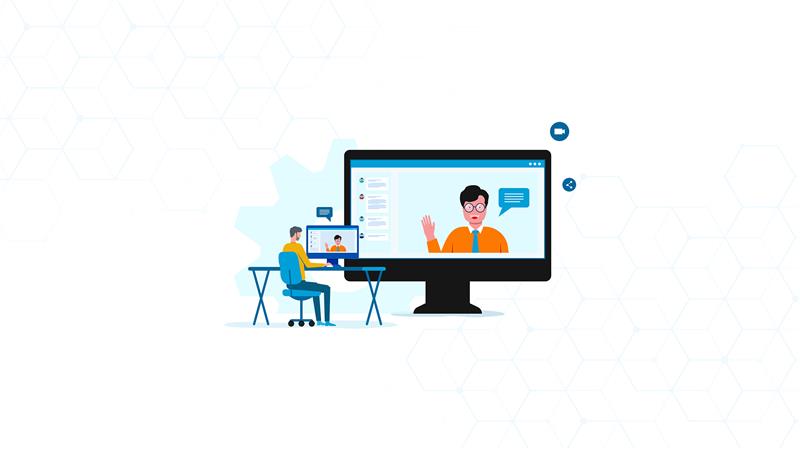
For institutions that prefer live human oversight, remote webcam proctoring can be paired seamlessly with digital platforms. Students meet virtually with an invigilator who validates identity and monitors the environment, while the exam itself runs through a secure online testing platform.
These mechanisms collectively make higher ed remote assessments more reliable, giving educators the assurance that academic rigor is preserved, even outside the classroom.
Balancing Trust and Technology in STEM Education
Remote proctoring is often misunderstood as an act of mistrust. In reality, it is a safeguard for both students and institutions. STEM education, in particular, demands rigorous evaluation of complex concepts—whether in mathematics, physics, engineering, or chemistry. If integrity falters, the value of learning diminishes.
At the same time, proctoring should not overshadow pedagogy. Effective digital assessment strategies go beyond monitoring to actively enhance the learning process. For example, as discussed in innovative STEM assessment approaches, combining algorithmic problem sets with detailed feedback not only tests understanding but also deepens conceptual clarity.
This balance—between maintaining strict exam protocols and designing engaging assessments—is at the heart of future-ready higher education.
The Role of Möbius in Remote Assessments
While many online exam integrity tools exist, few are designed with the specific needs of STEM disciplines in mind. This is where Möbius stands apart.
Möbius, a trusted platform for digital STEM education, integrates seamlessly with remote proctoring solutions to create a holistic, secure, and student-centric experience. Its Proctored Exam type enables institutions to:
- Require proctor authorization before test initiation or grading.
- Restrict external browsing through full-screen secure modes.
- Incorporate randomized algorithmic questions that personalize each student’s attempt.
- Integrate with webcam-based or third-party online invigilation software without requiring technical complexities.
Most importantly, Möbius ensures that assessment integrity does not compromise the student learning experience. As demonstrated in insight-driven analytics, the platform equips educators not just with security features but with actionable data to understand student progress.
In essence, Möbius bridges the gap between academic integrity in e-assessments and innovation in digital pedagogy.
Looking Ahead: Remote Proctoring as a Foundation for Trust
The future of higher education is not merely about moving exams online—it is about redefining them for a digital-first generation. Remote proctoring solutions and secure online testing platforms will remain essential to safeguard fairness and credibility, particularly in STEM education where precision and rigor are non-negotiable.
By integrating AI exam monitoring, adaptive assessments, and flexible proctoring workflows, institutions can build trust without sacrificing accessibility or inclusivity. As highlighted in the shift from paper-based to digital exams, this evolution is not only practical but also transformative for student engagement and institutional credibility.
With platforms like Möbius, educators no longer have to choose between innovation and integrity—they can embrace both.
Ready to see how Möbius supports secure and scalable STEM assessments? Schedule a demo today.